Education | Knowledge | Development

Center of Excellence

Basics of Electronics for Mobile Phone Repair (DT111) — Electronics Fundamentals for Aspiring Technicians | Level 2

By Microlek Skills Academy

4,8

Course Code:DT111

ABOUT THE COURSE

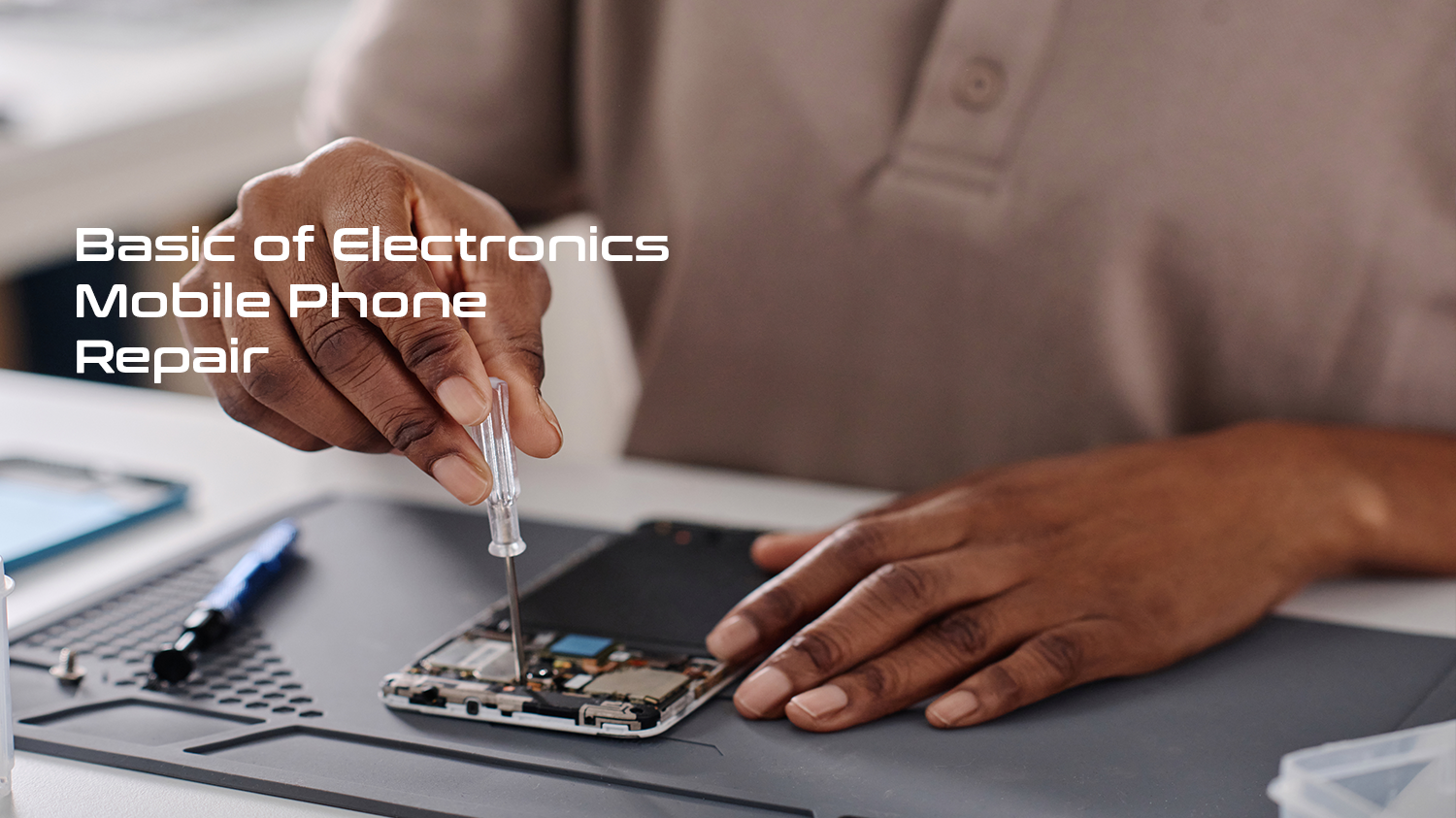
Every professional electronics and mobile phone repair technician starts with a thorough understanding of the foundational principles of electronics — and the Basics of Electronics for Mobile Phone Repair (DT111) is designed to give you exactly that foundation. Over two intensive training days, you will gain the essential knowledge of electronic theory and its practical application in modern mobile devices: from voltage, current, and circuit types to component identification, PCB layouts, and the use of a digital multimeter for real-world measurement. This course bridges the gap between having no electronics background and being ready to engage confidently with mobile phone components, circuit boards, and diagnostic tools. It is the ideal starting point for anyone entering the electronics repair industry — and a critical stepping stone toward the Full Training Course (FT100), Micro-Soldering training, or schematic diagram reading. Whether you are brand new to electronics or just want to ensure your foundational knowledge is rock solid, this course gives you the confidence and competence to move forward.

WHAT YOU WILL LEARN

COURSE HIGHLIGHTS

COURSE CURRICULUM

  • Introduction: Introduction to Electronics
  • Lesson 1: Introduction to ESD (Electrostatic Discharge)
  • Lesson 2: What is Electronics?
  • Lesson 3: Voltage and Current (AC and DC)
  • Lesson 4: Types of Electronic Components (Passive and Active)
  • Lesson 5: Standard Electrical Units of Measure
  • Lesson 6: Ohm’s Law & Practical Application (Voltage, Current)
  • Lesson 7: Different Types of Electrical Circuits
  • Lesson 8: Electronic Component Symbols & Functions
  • Lesson 9: Identifying Electronic Components (Through-hole & SMD)
  • Lesson 10: Component Orientation & Polarity on PCB
  • Lesson 11: Identifying Components on a Circuit Board
  • Lesson 12: Types of PCB (THT & SMT)
  • Lesson 13: Learn how to use a Digital Multimeter

REQUIREMENTS

WHO IS THIS COURSE FOR

CAREER OUTCOMES & OPPORTUNITIES

BENEFITS OBTAINED

R5999.99

R6999

Course Duration:02 Days

Course level:2

Benefits Obtained :

SHARE :

Course related

Level 3